
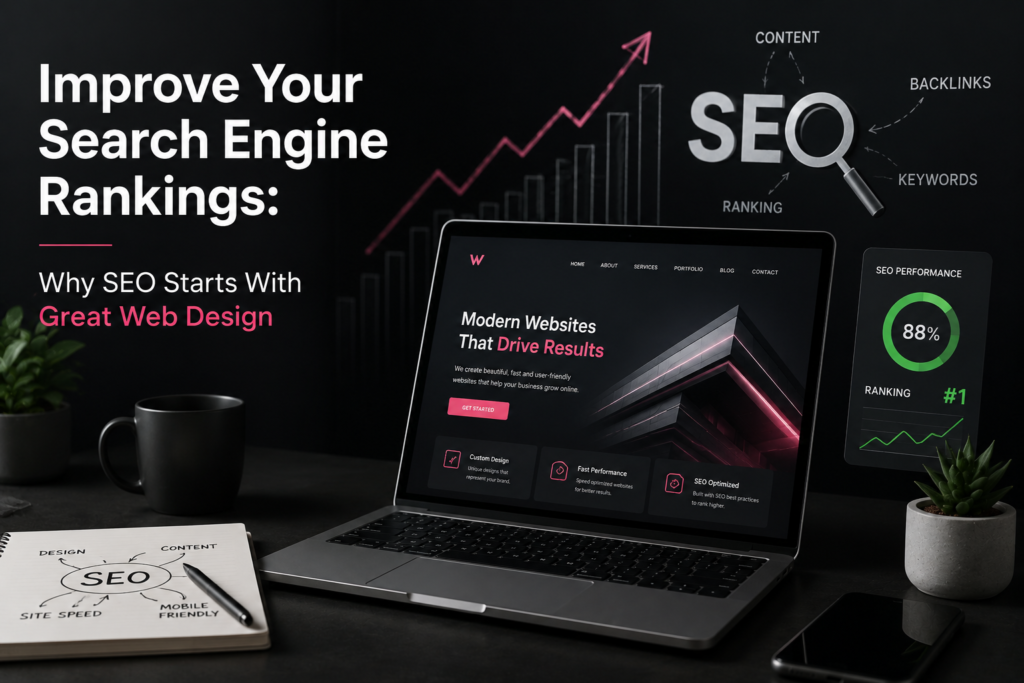
Imagine you’ve spent weeks building a beautiful website. The design looks amazing, the content is well written, and everything works perfectly. You publish it, sit back, and wait for visitors to arrive.
A few days pass.
Then a few weeks.
Still, almost nobody visits your website.
It’s frustrating, but it’s also one of the most common problems businesses face. The truth is, creating a great website is only half the job. If people can’t find it on search engines like Google, it becomes much harder to attract new customers.
That’s where Search Engine Optimization, or SEO, comes in.
SEO isn’t about tricking search engines or stuffing pages with keywords. It’s about making your website easy for both people and search engines to understand. When your website is fast, well-organized, and genuinely helpful, search engines are much more likely to recommend it.
The good news is that many of the things that improve SEO also make your website better for real visitors. That’s why good web design and good SEO always go hand in hand.
Search Engines Want to Help People
Think about how you use Google.
When you search for something, you expect useful answers almost instantly. You don’t want slow websites, confusing layouts, or pages filled with irrelevant information.
Google wants exactly the same thing.
Its goal is to recommend websites that provide the best experience for users. Every time someone searches for a product, service, or question, Google looks through millions of pages to decide which ones deserve to appear first.
It doesn’t just look at keywords anymore.
It looks at how fast a page loads, whether it works well on mobile devices, how easy it is to navigate, whether the content is trustworthy, and even how visitors interact with the site.
In other words, SEO today is less about pleasing an algorithm and more about creating a website people genuinely enjoy using.
Your Website Speed Matters More Than You Think
We’ve all experienced it.
You click on a website, wait… and wait… and eventually give up before it even finishes loading.
Most visitors won’t wait very long.
A slow website creates a poor first impression, increases bounce rates, and can even reduce sales.
Search engines notice this too.
Fast-loading websites usually perform better because they offer a smoother experience for users.
Improving speed doesn’t always require major changes. Compressing images, removing unnecessary plugins, using clean code, and choosing reliable hosting can make a significant difference.
Sometimes, a website doesn’t need a redesign—it simply needs better optimization.
Mobile Users Come First
Take a look around the next time you’re in a café, on a bus, or waiting in line.
Almost everyone is using their phone.
That’s exactly why Google now focuses heavily on mobile-friendly websites.
If visitors have to zoom in just to read your content or struggle to tap buttons because everything is too small, they’ll leave.
A responsive website automatically adjusts to different screen sizes, making the experience feel natural whether someone is browsing from a desktop, tablet, or smartphone.
Mobile optimization isn’t just good design anymore.
It’s an essential part of SEO.
Great Content Still Wins
No matter how beautiful your website is, people visit because they’re looking for information.
If your content answers their questions, solves their problems, or helps them make better decisions, they’re more likely to stay longer and come back again.
That’s exactly what search engines want to reward.
Instead of writing just to include keywords, focus on writing for real people.
Explain things clearly.
Share useful insights.
Answer common questions.
Use examples whenever possible.
Helpful content naturally earns more attention than content written only for search engines.
Ironically, the less you try to “game” SEO, the better your results often become.
Clear Structure Makes Everything Easier
Imagine walking into a library where every book is scattered randomly across the floor.
Finding anything would be almost impossible.
Websites work the same way.
Visitors should immediately understand where to go and how to find what they’re looking for.
Clear headings, logical page structure, simple navigation, and organized content all improve usability.
Search engines also rely on this structure to understand your website.
Well-organized pages help Google identify your main topics, making it easier to recommend your content to the right audience.
Good structure benefits everyone.
Images Need Attention Too
Images make websites feel engaging and professional, but they can also create problems if they’re not optimized.
Large image files slow down websites.
Missing image descriptions make pages less accessible.
Poor-quality visuals reduce credibility.
Simple improvements like compressing images, using descriptive file names, and adding alt text can improve both performance and SEO.
It’s a small detail that often gets overlooked, but it plays a bigger role than many people realize.
Internal Links Help Visitors Explore
Think of your website like a city.
Roads connect different places, making it easier for people to travel.
Internal links do the same thing.
When you connect related pages together, visitors naturally discover more of your content.
For example, someone reading a blog about responsive web design might also want to learn about SEO or website speed.
Internal links guide them toward those pages.
Search engines also use these links to understand the relationships between your content.
The easier it is to navigate your website, the stronger its overall structure becomes.
User Experience Affects SEO
Years ago, SEO focused mostly on keywords.
Today, user experience plays a much bigger role.
If visitors leave immediately after opening your website, search engines may interpret that as a sign that the page wasn’t useful.
On the other hand, if people spend time reading your content, exploring multiple pages, and interacting with your website, those are positive signals.
That’s why modern SEO isn’t separate from design.
The two work together.
A website that feels easy, enjoyable, and intuitive naturally performs better over time.
Don’t Chase Every SEO Trend
Every few months, you’ll find articles claiming they’ve discovered the latest SEO secret.
One week it’s keyword density.
The next week it’s AI content.
Then it’s backlinks.
While these topics matter, constantly chasing trends often leads businesses in the wrong direction.
Google updates its algorithms regularly, but one thing rarely changes:
Useful websites continue to perform well.
Instead of looking for shortcuts, focus on creating genuine value.
Websites built around helping users almost always outperform websites built around manipulating rankings.
Local SEO Can Make a Huge Difference
If you serve customers in a specific city or region, local SEO deserves special attention.
People often search for services using phrases like “web designer near me” or “best website developer in Bangalore.”
Having accurate business information, location-specific content, customer reviews, and a properly optimized Google Business Profile can make your website much easier to discover.
For many small businesses, local SEO brings some of the highest-quality visitors because those people are already looking for exactly what they offer.
SEO Is a Long-Term Investment
One of the biggest misconceptions about SEO is that it’s a one-time task.
It isn’t.
Search rankings change constantly.
Competitors publish new content.
Technology evolves.
User behavior shifts.
That’s why successful websites continue improving over time.
Publishing helpful blog posts, updating old pages, improving performance, and refining user experience all contribute to steady long-term growth.
SEO isn’t about getting quick results.
It’s about building a strong online presence that continues growing month after month.
Avoid Common Mistakes
Many websites unknowingly hurt their own rankings.
Some publish duplicate content across multiple pages.
Others fill articles with repetitive keywords that sound unnatural.
Some ignore broken links, outdated information, or slow-loading pages.
These problems don’t always seem serious individually, but together they create a poor experience.
Regularly reviewing your website helps identify these issues before they become bigger problems.
Sometimes small improvements produce surprisingly large results.
Why Design and SEO Should Work Together
One of the biggest mistakes businesses make is treating web design and SEO as two separate projects.
In reality, they support each other.
A fast website improves rankings.
A clear layout improves readability.
Responsive design keeps visitors engaged.
Helpful content builds authority.
Clean navigation encourages exploration.
Everything works together toward the same goal—creating a better experience for your audience.
When designers and SEO specialists think about the visitor first, search engines naturally respond positively.
Final Thoughts
Improving your search engine rankings isn’t about finding shortcuts or chasing the latest algorithm update. It’s about creating a website that people genuinely enjoy visiting.
When your pages load quickly, your content answers real questions, your navigation feels effortless, and your design works beautifully across every device, you’re already doing many of the things search engines value most.
SEO should never feel like a checklist. Instead, think of it as an ongoing process of making your website more useful, more accessible, and more trustworthy.
The best rankings don’t come from trying to outsmart Google. They come from consistently delivering value to your visitors.
Focus on helping people first, and search engines will usually follow.