
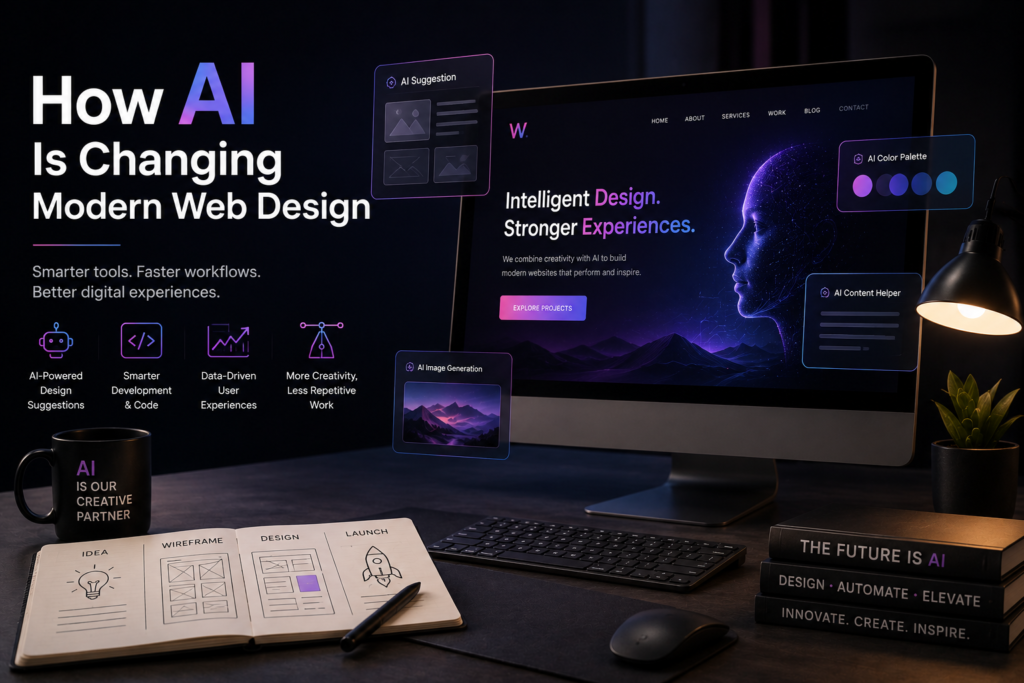
A few years ago, building a website meant spending hours creating layouts, writing code, and making every little change by hand. Today, things have changed a lot. Artificial Intelligence has become a part of the web design process, helping designers work faster and explore ideas more efficiently.
But here’s something many people get wrong—AI doesn’t build great websites on its own. It simply makes the process smoother. The creativity, strategy, and final decisions still come from the designer.
AI Helps Speed Up the Creative Process
Every project starts with an idea, but turning that idea into a working website can take time. AI helps by generating layout suggestions, color combinations, content ideas, and even rough wireframes within minutes.
Instead of starting with a blank screen, designers now have a solid foundation to build on. This means more time can be spent refining the design rather than creating everything from scratch.
Better Ideas, Not Just Faster Work
One of the biggest advantages of AI is brainstorming.
Sometimes a client knows what they want but struggles to explain it. AI can generate different concepts based on a simple description, giving both the client and designer something visual to discuss.
It doesn’t replace creativity—it helps spark it.
Writing Code Becomes Easier
Developers are also using AI to make coding more efficient. Whether it’s generating a section of HTML, fixing CSS issues, or explaining a JavaScript error, AI can save valuable time.
That doesn’t mean developers stop coding. Every line still needs to be reviewed, tested, and customized to fit the project.
Think of AI as an assistant sitting beside the developer, not someone taking over the keyboard.
Creating Better User Experiences
A beautiful website means very little if visitors can’t use it comfortably.
AI can help analyze how users interact with a website and identify areas where people get stuck or leave. These insights make it easier to improve navigation, simplify layouts, and create a smoother experience for everyone.
At the end of the day, good design isn’t just about appearance—it’s about making things easy to use.
Content Still Needs a Human Voice
AI can generate blog ideas, product descriptions, or page content in seconds. That’s incredibly useful when you’re staring at a blank page.
However, the first draft is rarely the final draft.
Adding personality, real experiences, and a brand’s unique tone is what makes content feel authentic. That’s something AI still can’t fully replicate.
AI Saves Time on Repetitive Tasks
Every website includes tasks that aren’t particularly creative—renaming files, resizing images, generating placeholder text, or organizing content.
AI handles many of these repetitive jobs, allowing designers to spend more time focusing on the parts that actually matter: solving problems, improving user experience, and creating a website that stands out.
Why Human Creativity Still Wins
Technology continues to evolve, but people don’t choose a website because it was built with AI.
They choose it because it tells a story, feels trustworthy, and represents a business in the right way.
A successful website understands the audience, communicates the brand’s personality, and guides visitors toward taking action. Those decisions come from experience, creativity, and understanding—not automation.
Final Thoughts
Artificial Intelligence is changing the way websites are designed and developed, and that’s a good thing. It helps designers work faster, test ideas more easily, and spend less time on repetitive tasks.
But the best websites are still built through collaboration between technology and human creativity.
AI provides the tools. A designer brings the vision.